
Complete and partial dentures
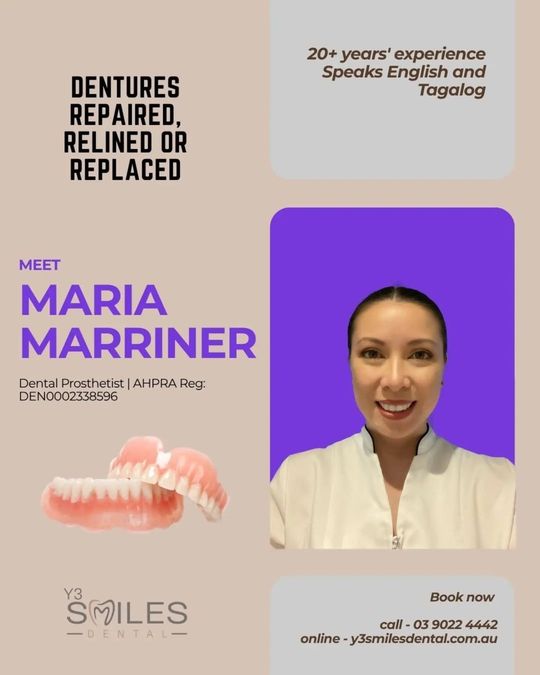
Dentures are removable replacements for missing teeth. A complete denture replaces all the teeth in the upper or lower jaw, and a partial denture fills gaps between natural teeth. At Y3 Smiles Dental in Broadmeadows, an experienced dental prosthetist looks after all denture work.
What is dentures?
Dentures replace missing teeth and help restore chewing, speech clarity and support for your face. There are three main types. Complete dentures replace all the teeth in the upper or lower arch, for people who have lost all their teeth in that jaw. Partial dentures replace several missing teeth while keeping your remaining natural teeth, and they help stop those teeth shifting. Implant-supported dentures are held in place by dental implants for extra stability and better chewing. Chrome cobalt and flexible nylon dentures are available as upgrades. Making dentures takes a few appointments: an examination and discussion of options, impressions and bite measurements, a try-in to check the fit and look, then the final fitting and follow-up adjustments. There's an adjustment period at first. Mild soreness, extra saliva and some changes to speech are common, and they improve with time and small adjustments. At Y3 Smiles Dental, an experienced dental prosthetist looks after all our patients' denture work, from impressions and try-ins to fitting and adjustments, working with our dentists when you need a check-up, extractions or implants first. Together they'll recommend the option that suits your mouth.
When might you need dentures?
All teeth missing in one jaw
A complete denture replaces the whole upper or lower set.
Several missing teeth
A partial denture fills the gaps and helps stop your remaining teeth from moving.
A loose or uncomfortable denture
An older denture may need adjusting, relining or replacing, or implants may help hold it steady.
What happens, in short
Consultation
An examination and a discussion of which denture options suit you.
Impressions and measurements
Our dental prosthetist takes precise impressions and bite measurements so your denture can be custom-made.
Try-in
You try the denture before it's finished, so our prosthetist can adjust the fit and appearance.
Fitting
Your completed denture is fitted and you're shown how to care for it.
Follow-up adjustments
Small adjustments by our prosthetist in the following weeks fine-tune comfort and fit.
What does it cost?
A complete denture, upper or lower, is from $2,000. Partial dentures and material upgrades are quoted at your assessment, and you get a written quote before anything is made.
You get a written, itemised quote with item numbers before any treatment starts, so you can check it with your health fund. Health funds · Payment options
Who makes and fits dentures at Y3 Smiles Dental?
An experienced dental prosthetist looks after all denture work at Y3 Smiles Dental, from the first impressions through to fitting and follow-up adjustments.
Dental prosthetists are registered dental practitioners trained to make, fit and repair dentures. If you need a check-up, extractions or implants first, our dentists look after that and work with our prosthetist on your plan.
How long do dentures last?
Well-maintained dentures can last several years, but they may need adjusting, relining or replacing as your mouth changes.
The gums and bone under a denture change shape over time, so regular check-ups help keep the fit right.
Will dentures affect my speech?
You may notice some changes to your speech at first. With practice, most people adjust within a few weeks.
Reading aloud and talking often helps you get used to them faster.
What can I eat with new dentures?
Start with soft foods and gradually introduce firmer foods as you get used to them.
Avoid very hard, sticky or chewy foods that could dislodge or damage your dentures.
Are dentures comfortable?
Modern dentures are made to fit well, and most people adapt after an adjustment period.
Some soreness early on is common. Follow-up adjustments make a real difference, so come back if anything rubs.
More about dentures
From our Instagram
Other questions people ask
How do I clean my dentures?
Remove and rinse them after eating, brush them daily with a soft brush and denture cleanser, and clean your gums and mouth too.
How should I store dentures?
Keep them moist when you're not wearing them, in denture solution or water. Avoid hot water, and handle them over a towel or basin so they don't break if dropped.
Should I sleep in my dentures?
It's generally recommended to take them out overnight to give your gums a rest. Your dentist will advise what suits you.
What is a reline?
A reline reshapes the fitting surface of a denture so it sits snugly again as your gums change.
Can a broken denture be repaired?
Often, yes. Repairs are assessed individually, so bring the denture in and we'll look at it.
Can I claim dentures on my health fund?
If your extras cover includes dentures or major dental, you can often claim part of the cost. We claim on the spot through HICAPS.