
Clear aligners
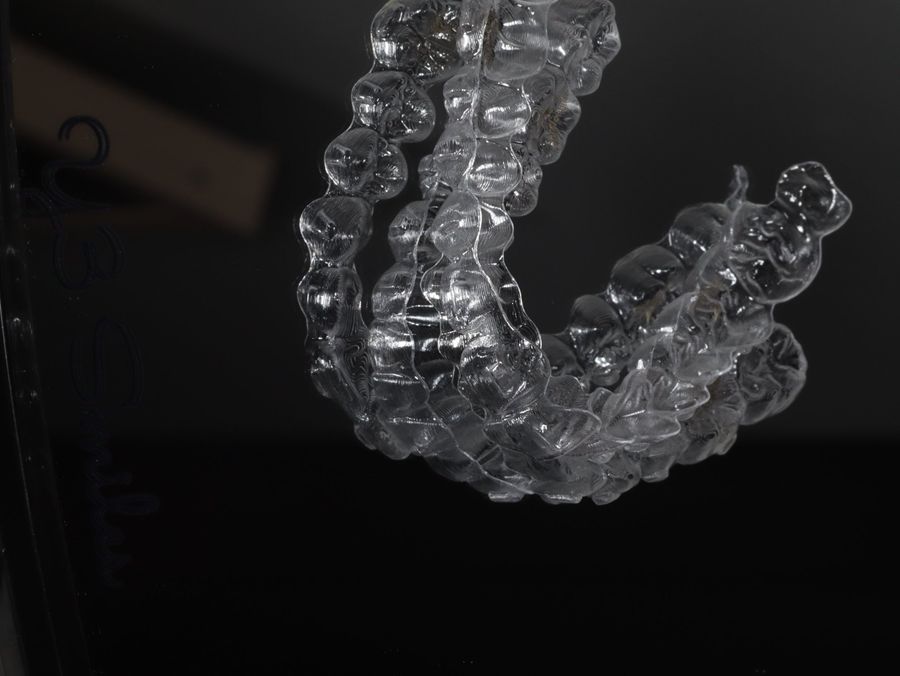
Clear aligners are removable clear trays that move teeth gradually into a better position. Y3 Smiles Dental in Broadmeadows offers two clear aligner systems, and principal dentist Dr Fatima Kurnaz recommends one after a paid clinical assessment.
What are clear aligners?
Clear aligners are a series of removable trays, each one slightly different from the last, worn in sequence so that teeth move a little at a time. They are taken out to eat and to clean your teeth, and they are far less visible than fixed braces, which is why most people ask about them. The reason they belong in a conversation about appearance, and not only about orthodontics, is that straightening changes where a tooth sits rather than covering it up. Nothing is shaved, nothing is bonded on, and the tooth ends the treatment as your own tooth in a better position. Where crowding or a tooth out of line is the real complaint, that is usually a better answer than putting a veneer over the problem, and it is worth weighing before anything irreversible is agreed to. Aligners are not right for everything. Some bites and some kinds of movement are better handled by fixed braces, and some cases should be seen by an orthodontist rather than treated here. That is a judgement made at the assessment with x-rays and a scan, not from a photograph. Gum disease and decay are dealt with first, because moving teeth through unhealthy bone and gums is a bad idea. The part people underestimate is the wearing. Aligners only work while they are in your mouth, and treatment that falls behind does so almost entirely because the trays were left out. The other part people underestimate is what happens at the end. Teeth drift back towards where they started for the rest of your life, so retainers are not an optional extra at the end of treatment. They are the thing that keeps the result, and wearing them is a long-term commitment rather than a final step.
What does it cost, and can I pay it off?
Clear aligner treatment at Y3 Smiles Dental starts from $3,000, and that fee includes your retainers and teeth whitening. A complex case costs considerably more. The fee follows how much movement is needed and how long treatment runs, so a case involving a few front teeth and a case involving both arches are different pieces of work, which is why your figure comes after the assessment and never over the phone. You get the quote in writing, itemised with item numbers, before anything is ordered. Can you pay it off? For orthodontic treatment, which includes clear aligners, Y3 Smiles Dental has an in-house interest-free payment plan. It is for orthodontic treatment only, it is arranged case by case, and the details are worked out with you at the quote stage. Extras cover with orthodontic benefits usually contributes something, though orthodontic limits are often separate from general dental ones, so ask your fund about the specific items.
You get a written, itemised quote with item numbers before any treatment starts, so you can check it with your health fund. What clear aligners cost, in full · Health funds · Payment options
When might you need clear aligners?
Crowded teeth
Teeth overlapping because there is not enough room along the arch. Crowding also makes cleaning harder, so it is a gum health question as well as an appearance one.
Gaps between teeth
Spacing that you would rather close by moving the teeth than by widening them with bonding or veneers.
A tooth that sits out of line
One tooth turned or set back from the others. Moving it addresses the position rather than disguising it.
Relapse after previous orthodontic treatment
Teeth that have drifted since braces years ago, usually because retainers stopped being worn.
Wanting to straighten discreetly as an adult
The trays are far less visible than fixed braces, which is the reason most adults ask about them.
Bite problems that make cleaning difficult
Where the way teeth meet contributes to wear or to areas you cannot clean properly. Assessment decides whether aligners can address it.
Common bite and alignment problems
How your teeth meet matters as much as how straight they look. These are the problems we see most often.
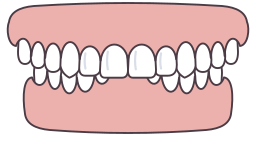
Overbite
When you bite together, the upper front teeth cover too much of the lower front teeth. In a deep overbite the lower teeth can bite into the gum behind them.
Underbite
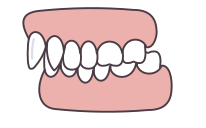
The lower front teeth sit in front of the upper front teeth when you bite, usually because the lower jaw sits further forward.
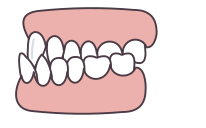
Open bite
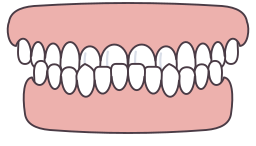
The back teeth meet but the front teeth don’t, leaving a gap that can make biting into food harder.
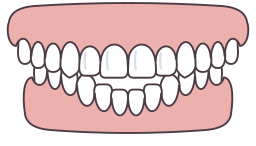
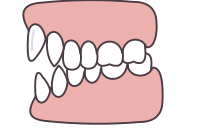
Crossbite
Some upper teeth bite inside the lower teeth instead of just outside them. It can affect one tooth or a group.
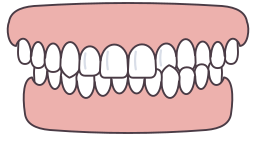
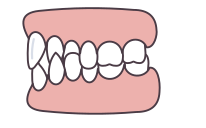
Crowding
There isn’t enough room along the arch, so teeth overlap, turn or sit out of line. Crowded teeth are also harder to clean.
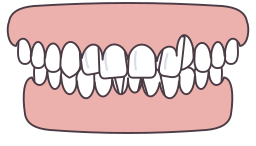
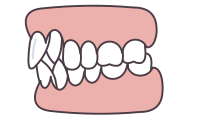
Spacing
Gaps between teeth. Food can catch in them, and some people would rather close them than live with them.
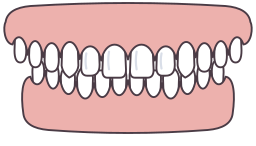
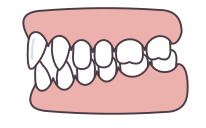
Protruding front teeth
The upper front teeth sit well forward of the lower teeth, which leaves them more exposed to knocks.
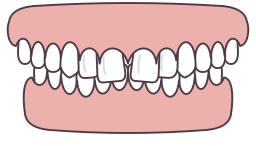
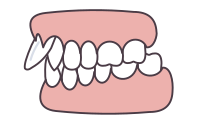
Teeth that moved after braces
Teeth that have drifted since earlier orthodontic treatment, often after retainers stopped being worn.
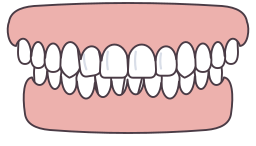
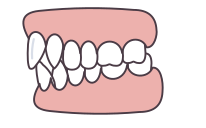
Many of these can be treated with clear aligners, and some are better treated with fixed braces or by an orthodontist. Your x-rays and scan decide, not a drawing.
What happens, in short
Assessment and records
Examination, x-rays and a scan of your teeth. Decay and gum disease are treated first, before any movement is planned.
The plan
A treatment plan showing what movement is possible and what it would take. You should be told plainly if aligners are not the right tool for your case.
The written quote
Itemised, with item numbers, before anything is ordered. Orthodontic treatment is the one area where an in-house interest-free arrangement may be available, assessed case by case.
Wearing the trays
Each tray is worn as instructed and swapped for the next in sequence. They come out to eat and to clean, and they need cleaning themselves.
Review appointments
Progress is checked against the plan and adjusted where teeth are not moving as expected. This is also where problems with wear time get caught early.
Retainers
Fitted at the end and worn long term. Teeth move back towards their old position for life, so this is the part that keeps what you paid for.
Are clear aligners right for me?
Possibly, and you do not need to work that out before you come. Some bites and some movements are better treated with fixed braces, and some cases belong with an orthodontist.
That is decided at the assessment, from x-rays and a scan, not from a photograph or an online quiz. If aligners suit your case we can treat it here. We offer two clear aligner systems, and Dr Fatima recommends one after your assessment, based on what your teeth need. If aligners do not suit, you leave knowing what would work and with a referral to someone who does it. Dr Fatima Kurnaz is a general dentist, not a registered specialist, and where a case belongs with a specialist she will say so.
How long do I wear them each day?
20 to 22 hours a day. The trays come out only to eat and to clean your teeth.
Aligners move teeth only while they are in, and this is the single biggest reason treatment runs behind. Time already lost cannot be recovered, and the trays are sequenced, so a tray that has not done its job means the next one does not fit properly. That does not mean a plan that has slipped is ruined. Both the trays and the treatment plan can be adjusted along the way, which is what the review appointments are for, so tell us instead of pressing on or quietly giving up. If that many hours sounds unrealistic for your life, say so at the assessment and not after you have started.
How long does treatment take?
Generally 3 to 12 months, depending on your case.
That is a general range and not a promise. The length for your own teeth depends on how much movement is needed, and it is confirmed at the assessment and written into your plan. What is certain is that it takes longer when the trays are not worn for the hours above.
What's the free discovery session?
A free, no-obligation chat with our patient coordinator about clear aligners. It is not a clinical appointment.
Nobody examines your teeth, takes x-rays or gives clinical advice at a discovery session. It is a chance to see the clinic and ask how treatment works, what wearing the trays is like and how payment can be arranged. Finding out whether aligners suit your teeth takes a clinical assessment with Dr Fatima, and that is always a paid appointment. To book the session, use the booking form and write "free discovery session" in the message, or call us.
Do you do braces?
No. Y3 Smiles Dental provides clear aligner treatment and does not provide braces.
We say so plainly because it shapes the advice you get. If your case would be better treated with braces, you are told that at the assessment and referred to an orthodontist.
Why consider straightening before veneers?
Because moving a tooth leaves it as your own tooth, while covering it may mean reducing it first.
Where the complaint is crowding or a tooth out of line, straightening addresses the actual problem. Veneers can change the look of a misaligned tooth, but they do not change where it sits, and conventional veneers usually mean taking a layer off. If the least invasive answer matters to you, this is the order worth considering things in.
Do you have to wear retainers forever?
Effectively, yes. Teeth drift back towards where they started throughout life, so retainers are what hold the result.
People are often told this at the end of treatment when it sounds like an afterthought. It is not. It is part of what you are signing up for, and the most common reason adults come back asking about aligners a second time is that retainers stopped being worn after braces years earlier. Your retainers are included in the treatment fee.
Who provides aligner treatment here?
Principal dentist Dr Fatima Kurnaz, who provides clear aligner treatment at Y3 Smiles Dental in Broadmeadows.
She is a general dentist, not a registered specialist. That is stated plainly because orthodontics is an area where the distinction matters, and where a case is better handled by a specialist she will refer you rather than take it on.
Symptoms that can lead here
More about clear aligners
Other questions people ask
Will people be able to tell I am wearing them?
Far less than with fixed braces, which is the main reason adults choose them. They are not invisible, and someone close to you in conversation may notice, but they are not obvious across a room.
Can I eat with them in?
No. They come out to eat and to drink anything other than water, then your teeth are cleaned before the trays go back in. Eating with them in damages the trays, and drinking sugary or hot drinks through them is a good way to cause decay.
Does anything need doing before treatment starts?
Decay and gum disease are treated first. Moving teeth through unhealthy gums and bone makes both problems worse. A check-up, and gum treatment where it is needed, comes before any movement is planned. It is also where the x-rays and photographs that the plan is built on come from.
Does it hurt?
Not pain so much as pressure and tightness for a day or so after changing to a new tray, which is the teeth being moved. Ordinary pain relief covers it. Sharp pain, a tray that does not seat, or a tooth that feels loose beyond the usual are all reasons to ring us.
Will my health fund cover aligners?
Extras cover with orthodontic benefits usually contributes something, but orthodontic limits are often separate from general dental limits and may have a waiting period or a lifetime cap. Take the item numbers from your written quote to your fund and ask about your specific policy.
Can I pay for it over time?
Orthodontic treatment, including clear aligners, is the one area where an in-house interest-free arrangement may be available, assessed case by case. It is a direct debit arrangement discussed at the quote stage. Afterpay, humm and TLC are also accepted for treatment generally.
What happens if a tray is lost or does not fit?
Ring us rather than skipping ahead to the next one. Jumping a tray in the sequence is how treatment goes off track, and the fix is usually simple if we hear about it early.